In short
Whalehead is at 1100 Club Road in Corolla, on 39 acres of soundfront in Historic Corolla Park, owned and run by Currituck County. Edward Collings Knight Jr and his wife built it across the hunting seasons of 1922 to 1925 and called it Corolla Island. The National Register nomination describes it as a highly individualised combination of Beaux Arts form with Arts and Crafts and Art Nouveau detail, with half inch cork tile floors and signed, numbered Tiffany light fixtures. Museum admission is $7 for ages 13 to 54, $5 for ages 6 to 12, $5 for ages 55 and over, $5 for active military, and free for children 5 and under. Museum hours are Monday to Friday, 9 a.m. to 4 p.m., seasonally, and county holidays can change them. The park, the restored boathouse and the soundfront are free to walk. Phone (252) 453-9040.
- Where
- Corolla, NC
- Cost
- $7 ages 13 to 54, $5 ages 6 to 12, $5 ages 55 and over, $5 active military, free 5 and under. The surrounding park is free
- Season
- Museum Monday to Friday, 9 a.m. to 4 p.m., seasonal. County holidays can change it
- Time needed
- An hour inside the house, another hour in the park if the weather is behaving
- Good for
- A rain day in Corolla, anyone who likes houses, and picnics on the sound
- Address
- 1100 Club Road, Corolla, NC 27927
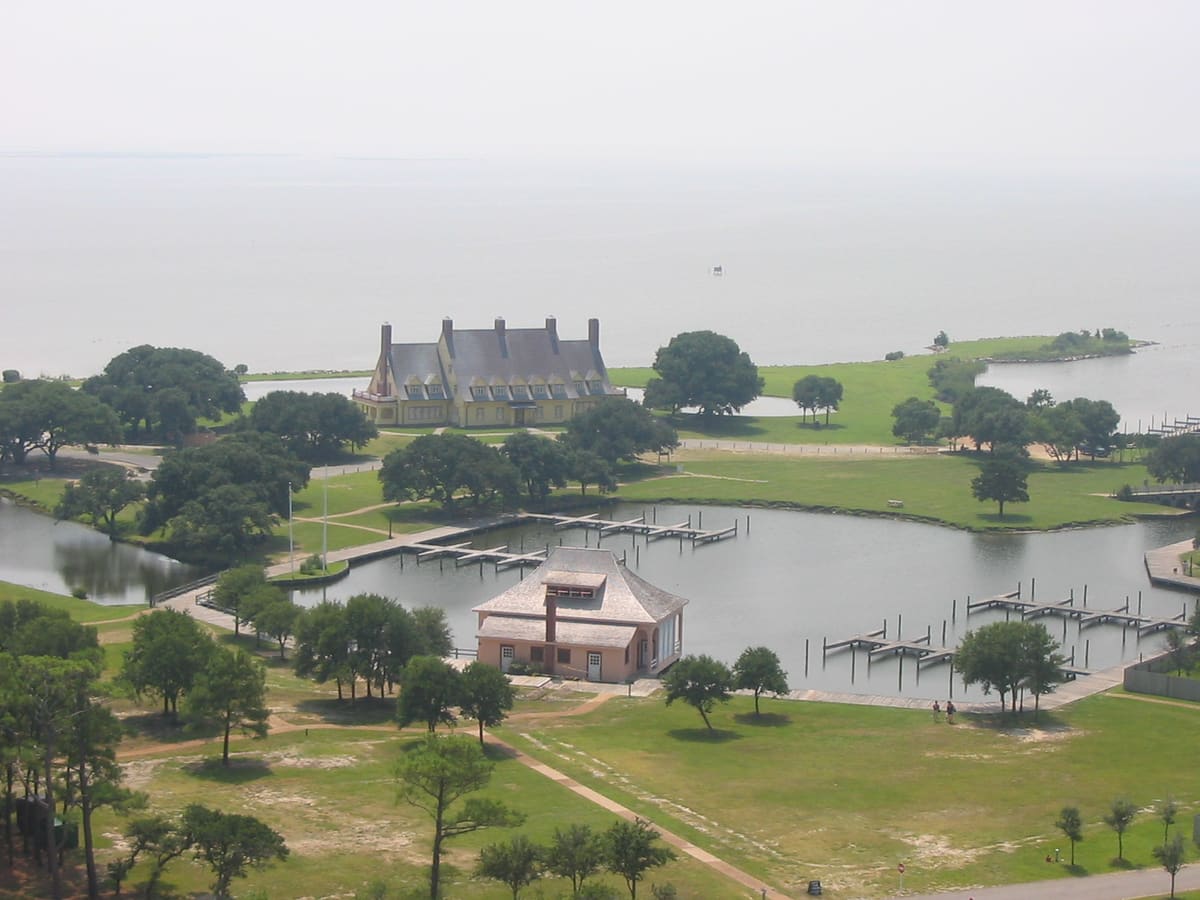
Duck hunting lodges are supposed to look like duck hunting lodges. This one is a yellow mansion with a copper roof on 39 acres of Currituck Sound, and the National Register nomination for it reaches for three styles at once: dramatic Beaux Arts form, with Arts and Crafts and Art Nouveau detail.
The reason it exists is better than the architecture. Edward Collings Knight Jr, a wealthy northerner, wanted a hunting retreat on the Currituck flyway that his wife could come to. The Lighthouse Club just up the road was men only and would not have her. So he bought land and built his own, and the couple spent the hunting seasons of 1922 to 1925 on site supervising the work. They called it Corolla Island.
The name it goes by now came later and is nobody's design decision. Ray T Adams bought the place in 1940, and by tradition a whale bone turned up while land was being cleared for an airstrip. Whalehead Club.
Cork floors and signed Tiffany
Most of what survives from that era on this coast was built to be useful: a lighthouse, a life saving station, a keeper's quarters. This was built to be lived in expensively, in a village with no road to it.
The details are the reason to pay. The floors are half inch cork tile. The light fixtures through the first and second floors are signed and numbered Tiffany, and in the foyer they hang as drop sconces with gold coloured glass globes shaped like morning glories. None of that concedes anything to where it is, which is the whole charm.
The county has restored the house and runs it as a museum with rooms presented as they were in 1925. An hour inside is about right.
Four operations, one car park
This is the thing to sort out before you arrive, because it is the same confusion Fort Raleigh causes down on Roanoke Island.
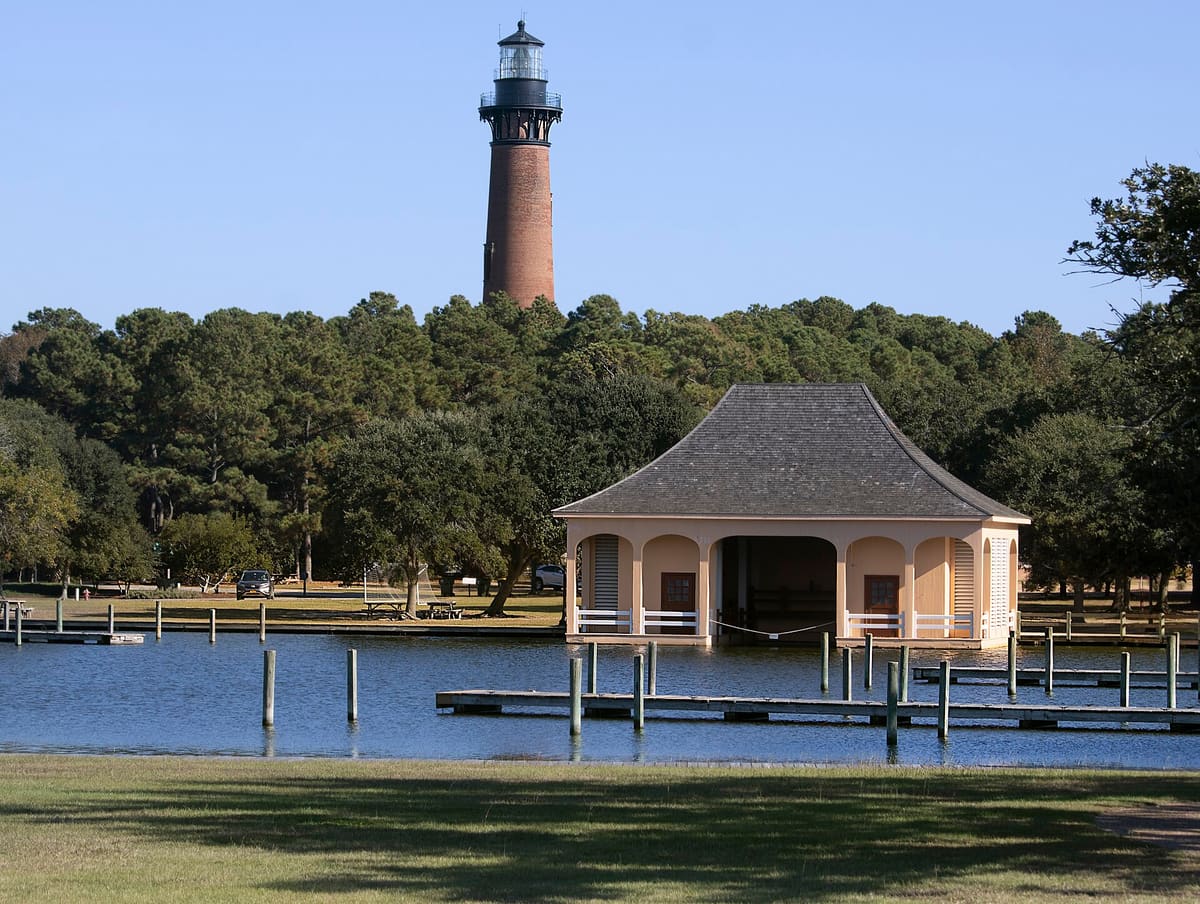
Historic Corolla Park is county land and free to walk. On it, or immediately beside it, sit four separate things with four separate arrangements: the Whalehead house museum, which is the $7 ticket; the restored boathouse; the Outer Banks Center for Wildlife Education; and the Currituck Beach Lighthouse, run by a different organisation entirely with its own climb fee. The Corolla Wild Horse Fund museum is a short walk away in Corolla Village.
So the honest plan is to park once and decide what you are actually paying for. A family who want the lighthouse climb and a picnic on the sound can do exactly that and skip the house. A wet afternoon flips it: the house is one of very few indoor options this far north.
Hours, the weekend problem, and the road that took thirty years
The address is 1100 Club Road, Corolla, and the number is (252) 453-9040.
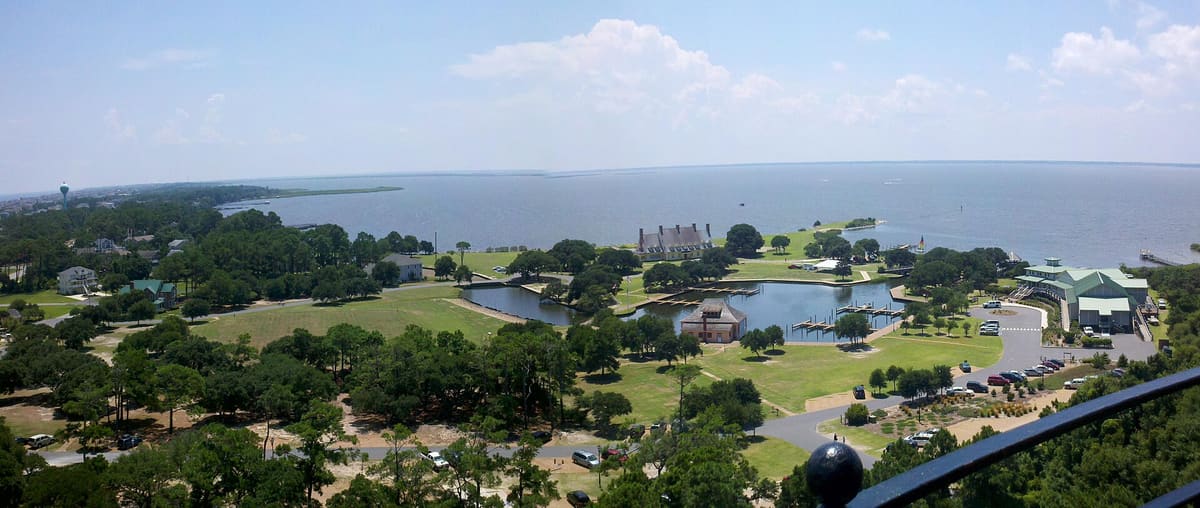
Here is the one that costs people a day. The museum runs Monday to Friday, 9 a.m. to 4 p.m. The schedule is seasonal and county holidays move it. Corolla is roughly an hour north of Kill Devil Hills on a good day and considerably worse on a summer Saturday, so a weekend drive up to see the inside of the house can end at a locked door. Check before you set out. The park, the boathouse grounds and the soundfront stay open and free regardless, which is what saves the trip if you get it wrong.
While you are on the lawn, it is worth knowing why Corolla felt like the end of the world until quite recently. In the 1950s the Olmsted Brothers, the successor firm to Frederick Law Olmsted, were hired to plan a Whalehead Club subdivision on this land, laid out around a highway extension coming up from the south. The owner, Ray T Adams, died in 1957. The road did not open until 1984. For roughly thirty years this was a finished plan waiting for a road, which is a fair part of why the wild horses still have somewhere to be.
Admission, hours and seasonal closures are set by Currituck County and change, so check the official Whalehead listing before you drive up.
Common questions
How much does Whalehead cost?
$7 for ages 13 to 54, $5 for ages 6 to 12, $5 for ages 55 and over, $5 for active military, and free for children 5 and under. That is for the house museum. Walking the park, the boathouse grounds and the soundfront costs nothing.
What are the hours?
Monday to Friday, 9 a.m. to 4 p.m., and the schedule is seasonal with county holidays affecting it. **Plan the house for a weekday.** Turning up on a Saturday expecting a tour is the standard mistake, and it is an hour's drive from Kill Devil Hills to find out.
Was it really a club?
Not when it was built. Edward Collings Knight Jr and his wife built it as a private winter residence across the hunting seasons of 1922 to 1925 and called it Corolla Island. Ray T Adams bought it in 1940 and renamed it: tradition has it that a whale bone turned up while land was being cleared for an airstrip, which is where Whalehead comes from.
Why build a mansion here at all?
Because his wife was not allowed in the club. Knight wanted a hunting retreat on the Currituck flyway that she could join him at, and the nearby Lighthouse Club was men only. So he bought land and built his own, which is also why the property was briefly called the Lighthouse Club before the name was changed to Corolla Island for the 1923 to 24 season.
Is it worth it if you do not care about old houses?
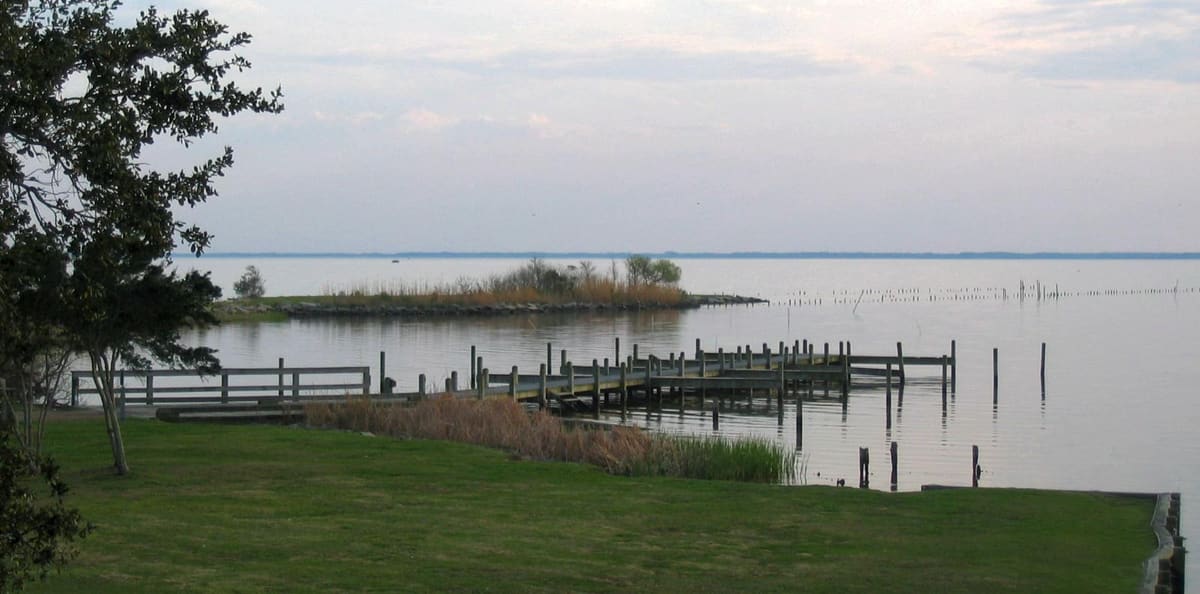
The park is, and that part is free. There is soundfront, a restored boathouse, picnic space and a playground, and the Currituck Beach Lighthouse is on the same site. The house interior is the paid bit, and it is genuinely unusual: cork tile floors and signed Tiffany fixtures in a building put up for shooting ducks.
What else is on the site?
Historic Corolla Park holds the house, the restored boathouse, the Outer Banks Center for Wildlife Education and the Currituck Beach Lighthouse, plus open soundfront lawn. The Corolla Wild Horse Fund museum is a short walk away in Corolla Village. Four separate operations, four separate ticketing arrangements, one car park.
Why did Corolla stay so remote for so long?
Because the road took decades. The Olmsted Brothers firm, the successor practice to Frederick Law Olmsted, was hired in the 1950s to plan a Whalehead Club subdivision here, drawn around a highway extension coming up from the south. The owner, Ray T Adams, died in 1957, and the road did not open until 1984.
Staying nearby?
Corolla is about an hour north of our Kill Devil Hills and Kitty Hawk places, so pair it with the lighthouse and make a day of it.
Browse the properties