In short
Currituck Beach Lighthouse stands in Corolla and is run by Outer Banks Conservationists, not the National Park Service. The 2026 season runs March 21 to November 30, daily 9 a.m. to 5 p.m., with Wednesday and Thursday evenings extended to 8 p.m. in June, July and August. Climbing costs $13, paid at the door, and there is no online booking. Children must be at least 4 years old to climb. Grounds, parking and the museum shop are free.
- Where
- Corolla, NC
- Cost
- $13 to climb. Grounds, parking and museum shop free
- Season
- March 21 to November 30, 2026, daily 9 a.m. to 5 p.m.
- Time needed
- 1 hour, or 2 with Historic Corolla Park
- Good for
- Families with children 4 and over, photographers, anyone refused at Bodie Island
- Address
- 1101 Corolla Village Road, Corolla, NC 27927
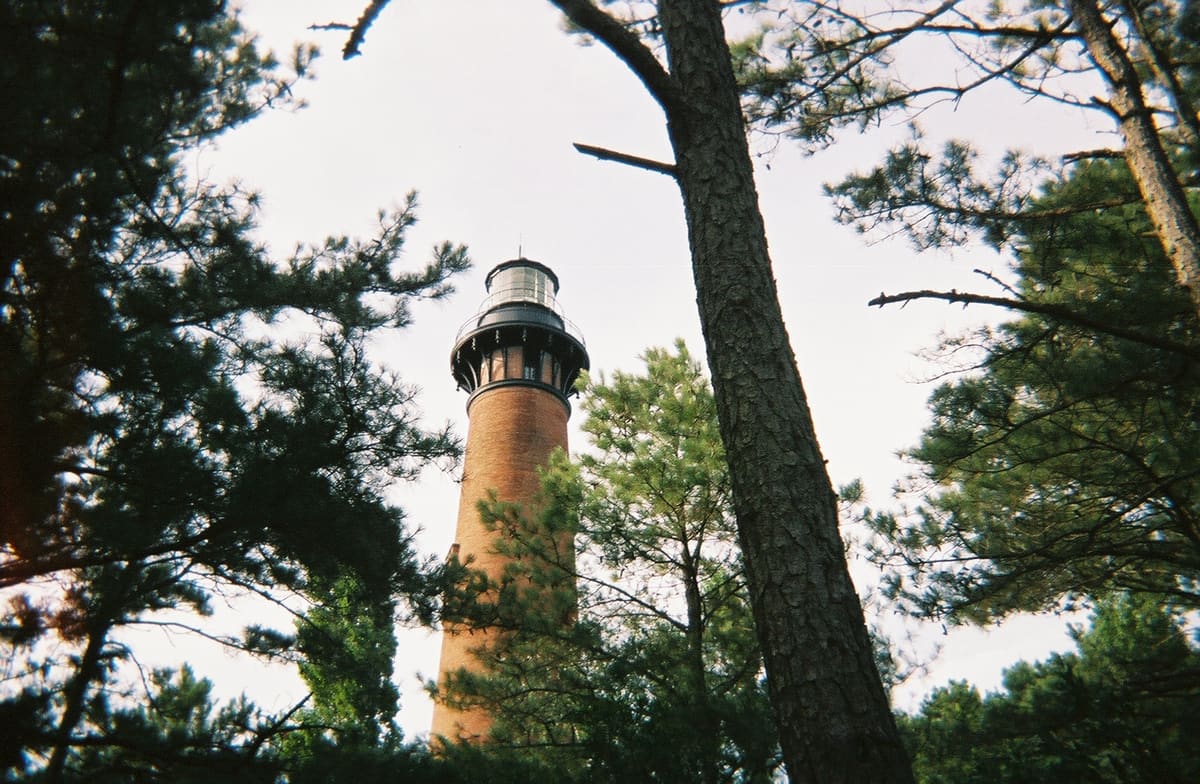
Corolla is the far end of the Outer Banks, past the last traffic light, where the paved road stops and the beach becomes a highway. The lighthouse there is the one nobody painted.
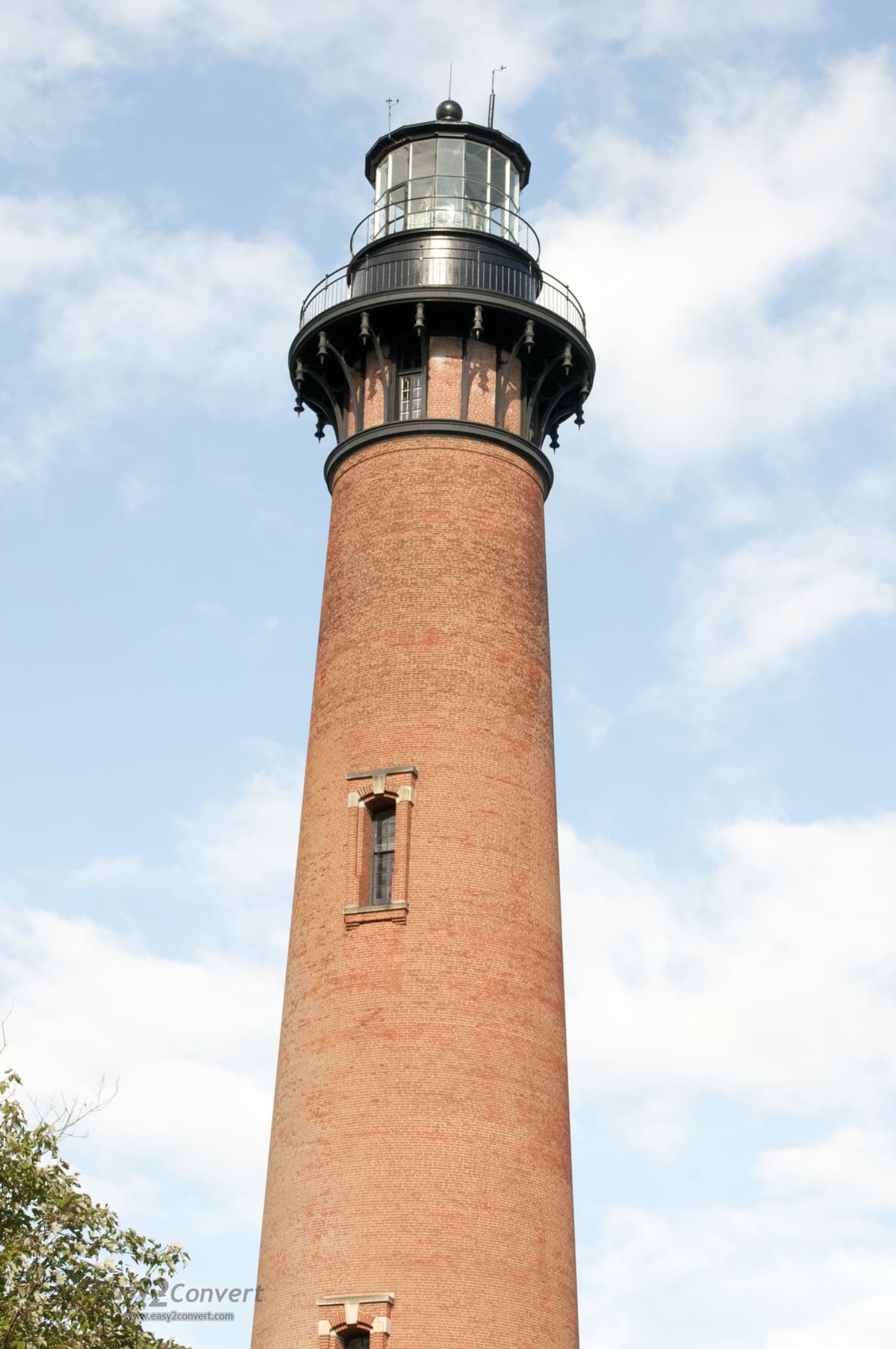
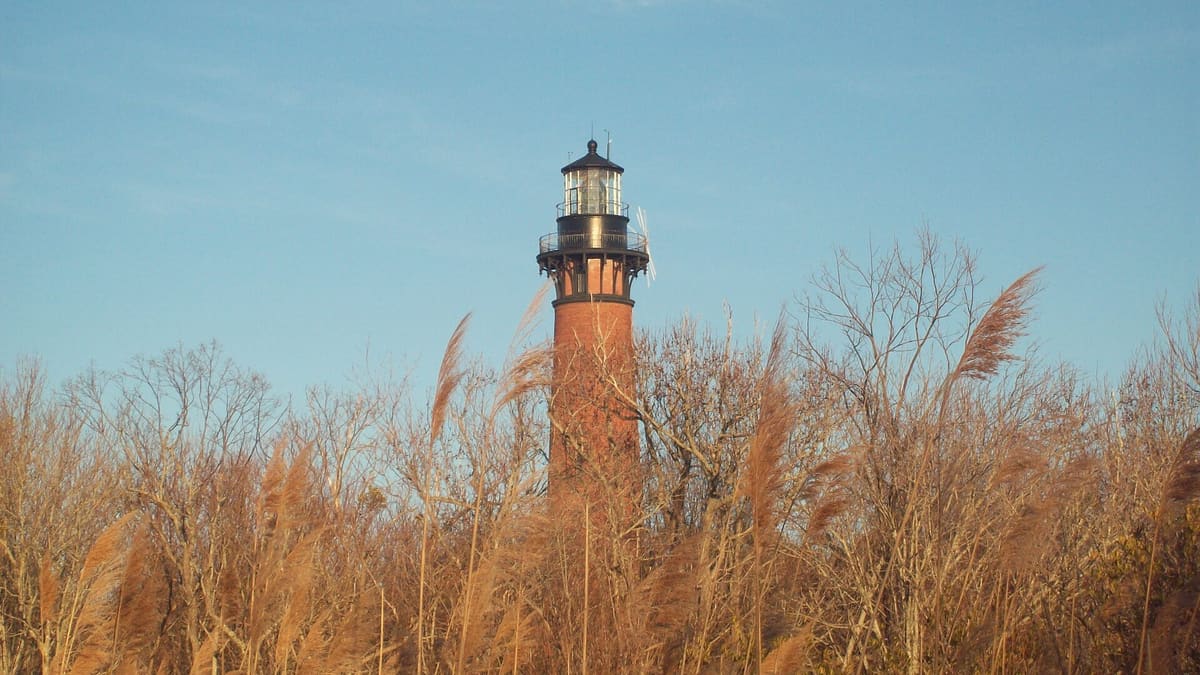
Bodie Island got black and white bands. Cape Hatteras got the spiral. Currituck Beach was left as bare brick, roughly a million of them, because the coastline around it was empty enough that its colour alone told sailors which light they were looking at.
Why this tower exists
By the 1870s the East Coast had one dark stretch left: 40 miles of unlit coastline between Cape Henry in Virginia and Bodie Island in North Carolina. Congress funded a light to close it in 1873.
It was lit on December 1, 1875, as a fixed white light with a red flash every 90 seconds, and its beam reached 18 nautical miles. The tower stands 162 feet. A keepers' duplex was finished the following May, and more than two dozen families lived in it over the working life of the light.
The climb is gentler than the number suggests
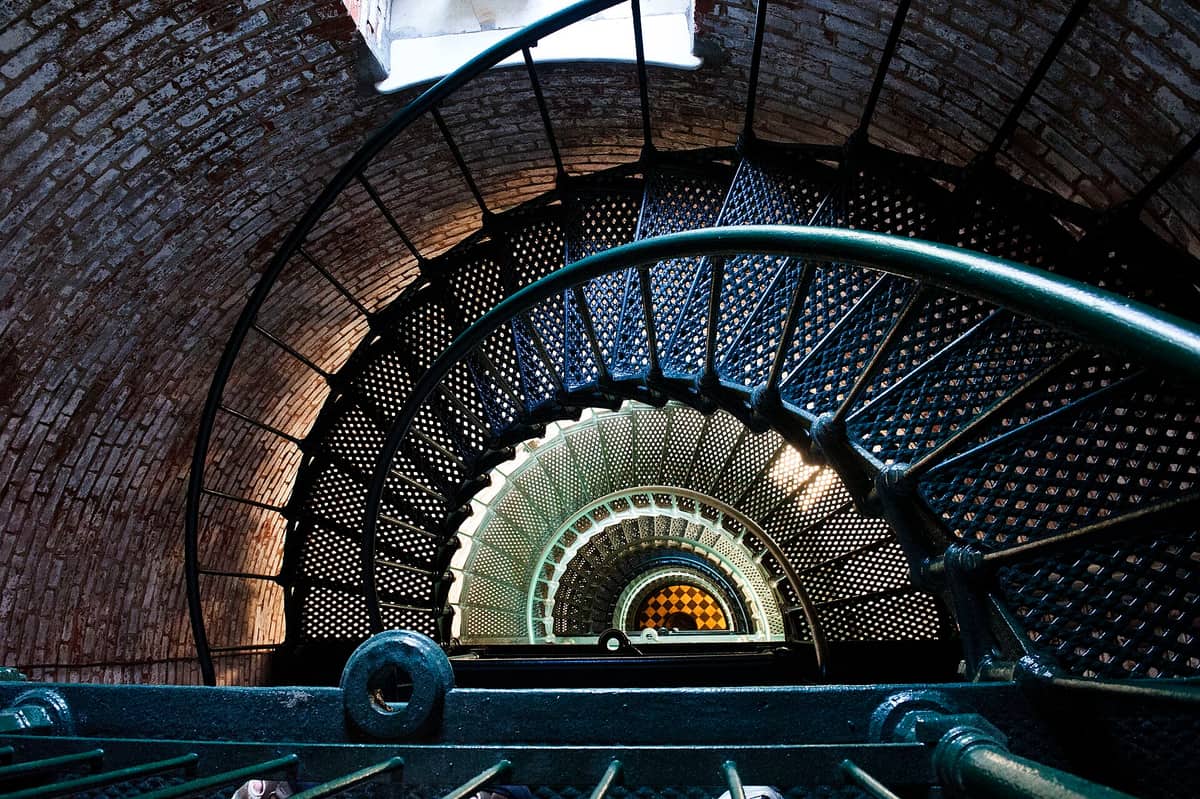
220 steps sounds worse than it is. The staircase is cast iron, it spirals up the inside of the brick shell, and it is broken by nine landings. You are never climbing more than a couple of dozen steps before there is somewhere to stand.
Compare that with Bodie Island, where 219 steps feel steeper because the rhythm is different. Families who bounced off one lighthouse often manage this one.
You need your hands free for the handrail, so wear a bag you can put on your back rather than carrying anything.
The landings are worth stopping at
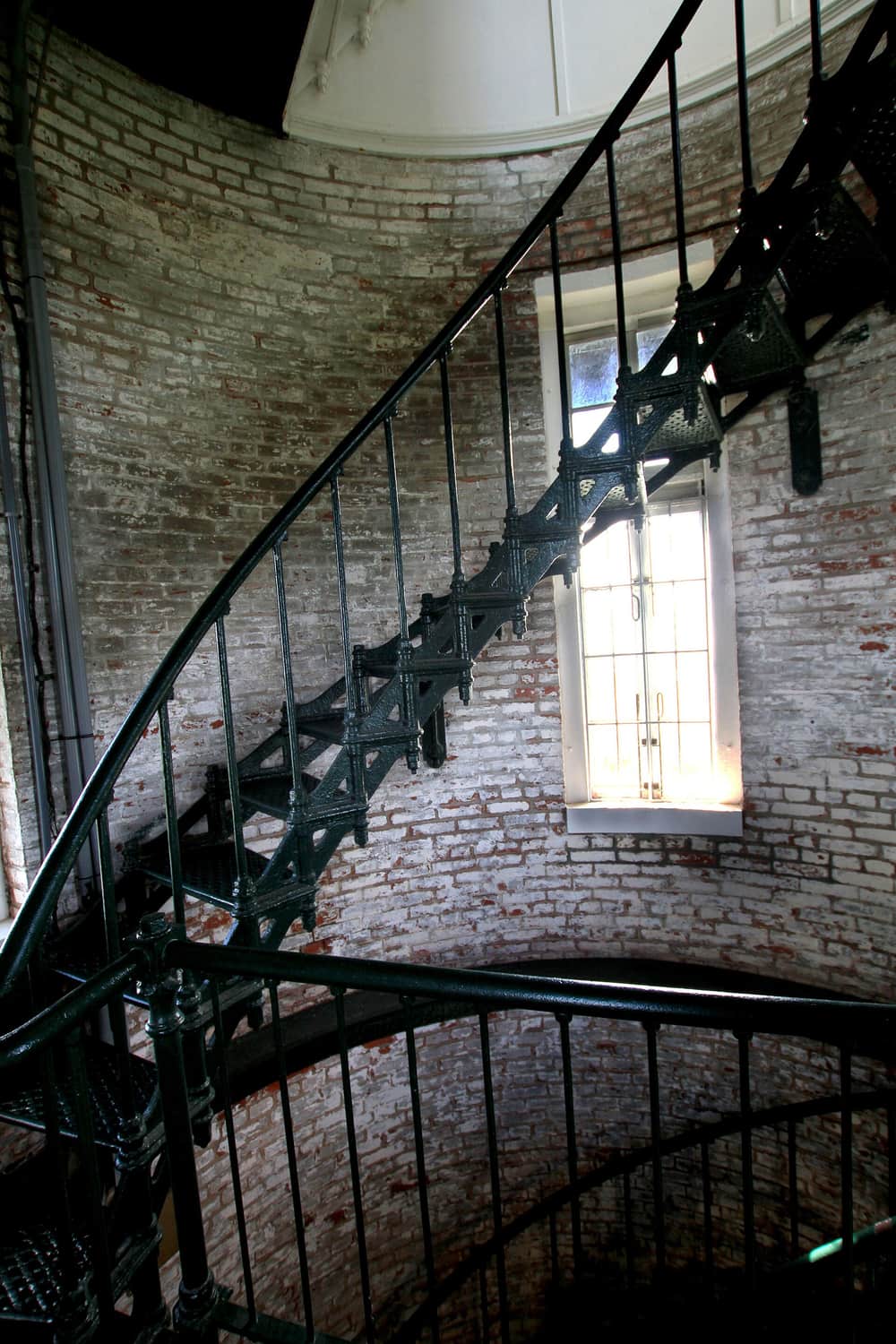
Each landing has a window set deep into brick that is several feet thick at the base. They are the best part of the interior, and they are where you will actually notice the engineering: the wall thins as you rise, which is why the stairwell gets narrower toward the top.
There is no queue system inside. If someone ahead of you is slow, you wait, and the landings are where that happens without anyone feeling rushed.
What you see from the top
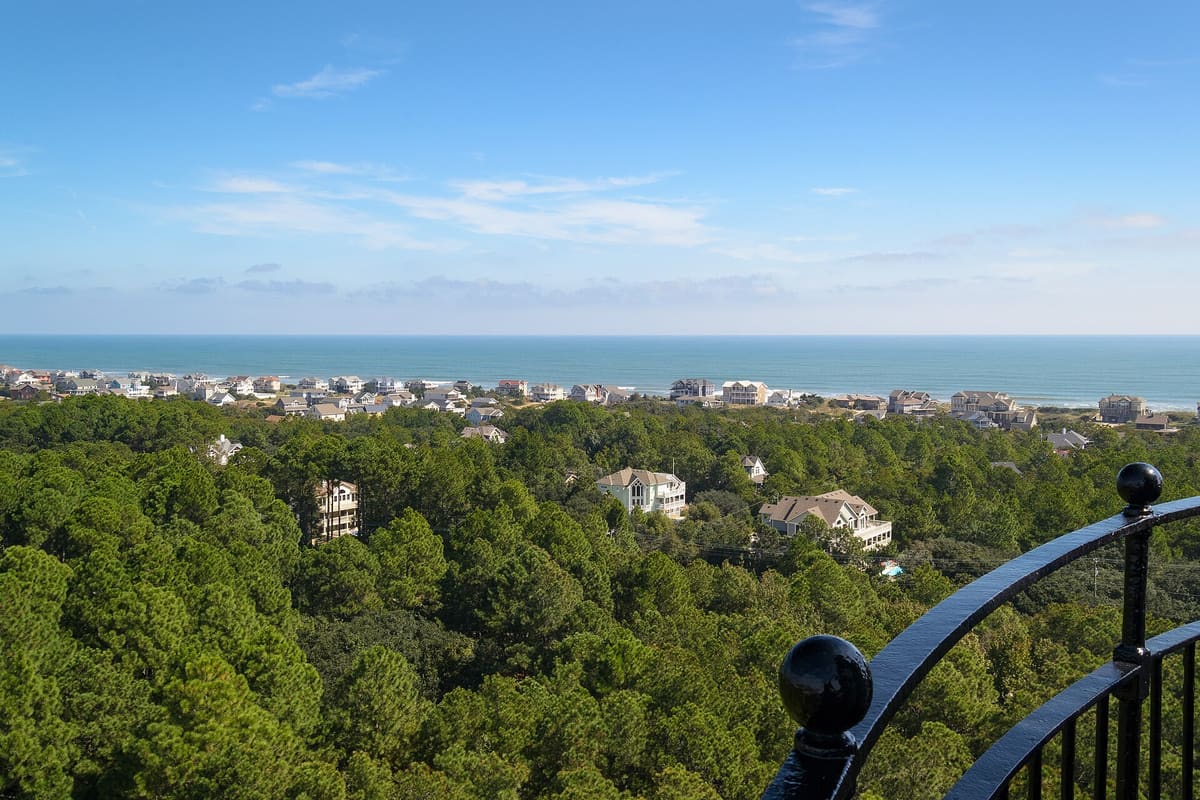
The gallery runs right around the lantern. On the ocean side you get Corolla's rooftops and then open Atlantic. Turn the other way and it is Currituck Sound, which is wide, shallow and usually flatter than the sea.
The lighthouse rule about drones applies inside the compound fence, so leave yours in the car.
The keepers' house and the compound
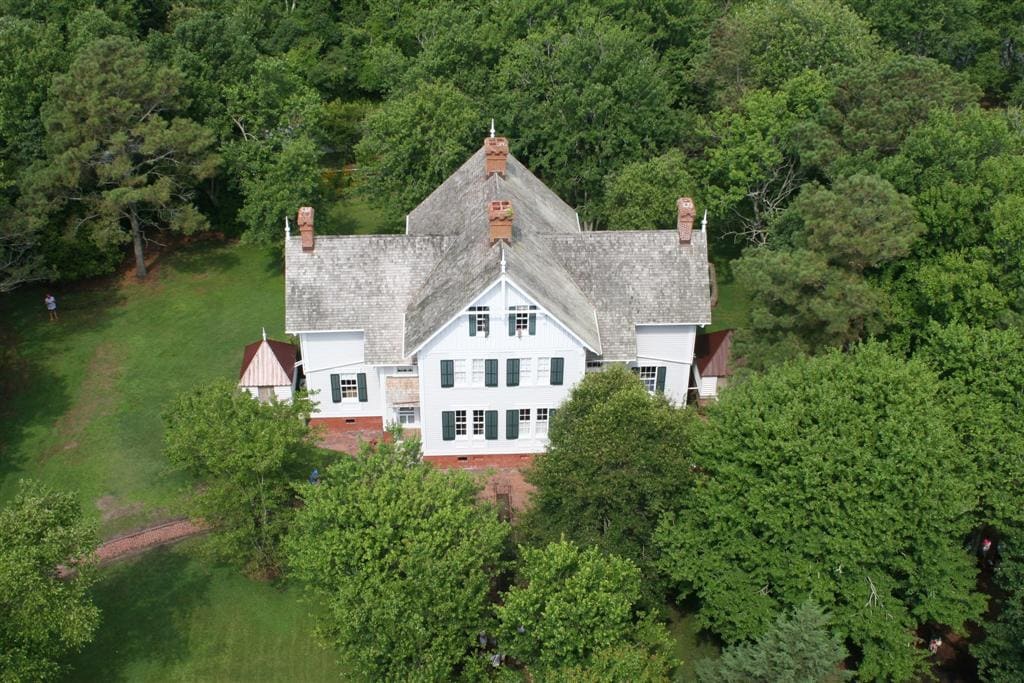
The 1876 duplex still stands in the compound, a wooden Victorian building with a steep roof that looks nothing like the tower beside it. It was built as two homes, one for the principal keeper and one for the assistant.
The grounds are free and pleasant to walk even if nobody in your group wants to climb, and the museum shop sits at the base with no admission charge.
Make it a half day, not a stop
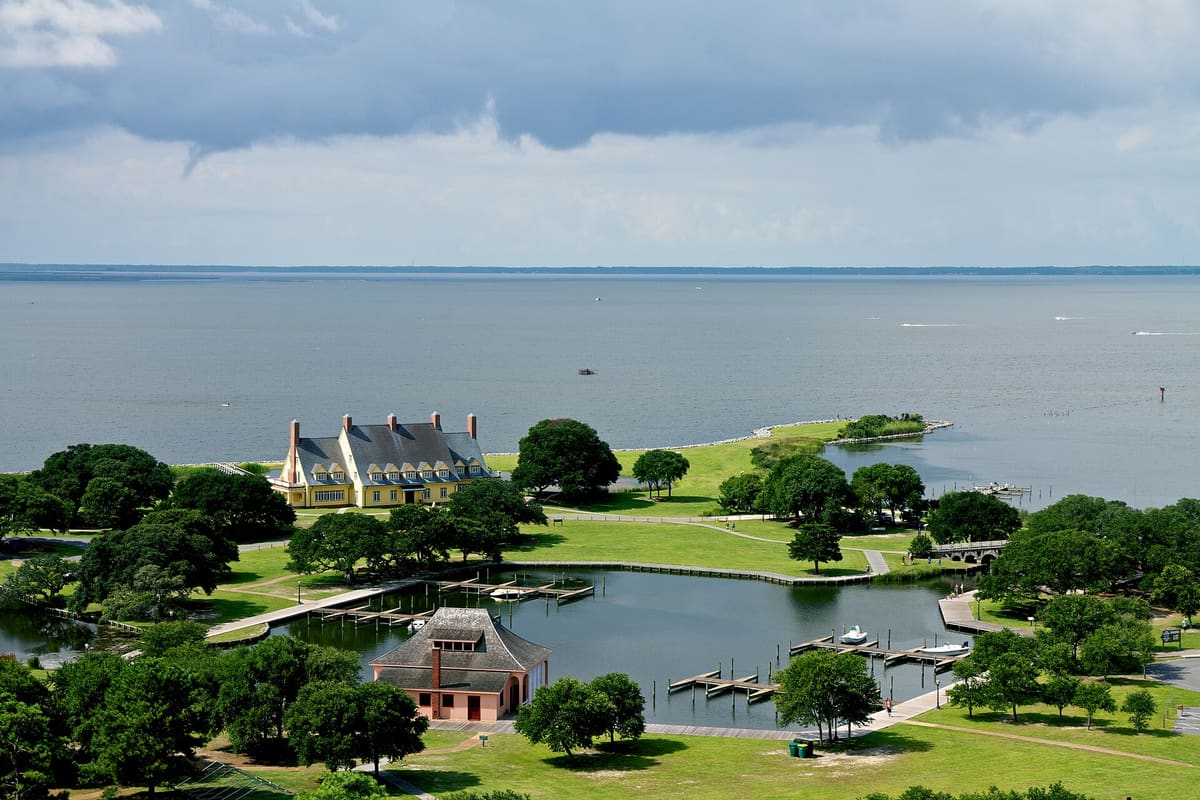
The lighthouse sits at the edge of Historic Corolla Park, which also holds Whalehead, a 1920s art nouveau house on the water, and the Outer Banks Center for Wildlife Education. Parking is shared and free.
That combination is the argument for driving up. Corolla is a fair way north, and one lighthouse alone is thin reward for the trip. Three things in one car park is a morning.
Practical notes
It is run by Outer Banks Conservationists, a private non-profit, not the National Park Service. That is why it costs $13 while Bodie Island costs $10, and why there is no America the Beautiful pass discount here.
The lighthouse office is on (252) 453-4939 and the museum shop on (252) 453-6778. Take the third or fourth left after Corolla's 11 mile marker, just past the sign for Historic Corolla Park. It closes for thunder, so on an unsettled afternoon call before you drive up.
Season dates and prices are set each year, so check the official Outer Banks Conservationists page before you go.
Common questions
How much does it cost to climb Currituck Beach Lighthouse?
$13, including North Carolina sales tax, paid at the front of the lighthouse by cash, check or card. There is no online advance ticketing. The grounds, the parking and the museum shop cost nothing. Outer Banks Conservationists notes that 77 percent of the admission is deductible as a charitable donation.
When is it open in 2026?
March 21 to November 30, daily from 9 a.m. to 5 p.m. In June, July and August it stays open until 8 p.m. on Wednesdays and Thursdays. It closes for thunder and big storms, and on Thanksgiving Day.
How many steps are there?
220, spread across nine landings. The landings matter: they break the climb into short stretches, which makes this an easier tower than it sounds.
Is there an age limit?
Children must be at least 4 years old to climb. Babies and toddlers aged 0 to 3 can go up in a carrier or backpack at no charge. Everyone climbing must have their hands free for the handrail, so nothing bulky.
Do I need to book ahead?
No, and you cannot. Tickets are sold only at the lighthouse on the day. That makes it the more forgiving of the two climbable Outer Banks lighthouses, since Bodie Island sells same-day tickets online that often go before breakfast.
Staying nearby?
Corolla is about 45 minutes north of our places in Kill Devil Hills, so this one is a half day rather than a quick stop.
Browse the properties