In short
The Corolla wild horses, known as Bankers, roam freely on the northernmost Currituck Outer Banks, north of where the paved portion of NC Highway 12 ends. The Corolla Wild Horse Fund manages the herd across 7,544 acres that also hold roughly 700 houses. The Currituck County wild horse ordinance makes it punishable by law to feed the horses or to come within 50 feet of them. Access to the off road area needs a four wheel drive vehicle, and a county issued beach parking permit is required to park on the beach from the second Saturday of May through the last Saturday in September. The Corolla Wild Horse Fund museum and gift shop is at 1130E Corolla Village Road, Corolla, open Tuesday to Saturday, 10 a.m. to 4 p.m. in season. Phone (252) 453-8002.
- Where
- Northern Currituck Outer Banks, NC
- Cost
- Free to see from the public beach. Museum admission and guided tours are separate
- Season
- The herd is there year round. The museum and gift shop open Tuesday to Saturday, 10 a.m. to 4 p.m. in season
- Time needed
- Half a day if you drive up the beach yourself, two hours on a guided tour
- Good for
- Anyone who wants to see the state horse of North Carolina living loose on a beach
- Address
- Corolla Wild Horse Fund museum and gift shop, 1130E Corolla Village Road, Corolla, NC 27927
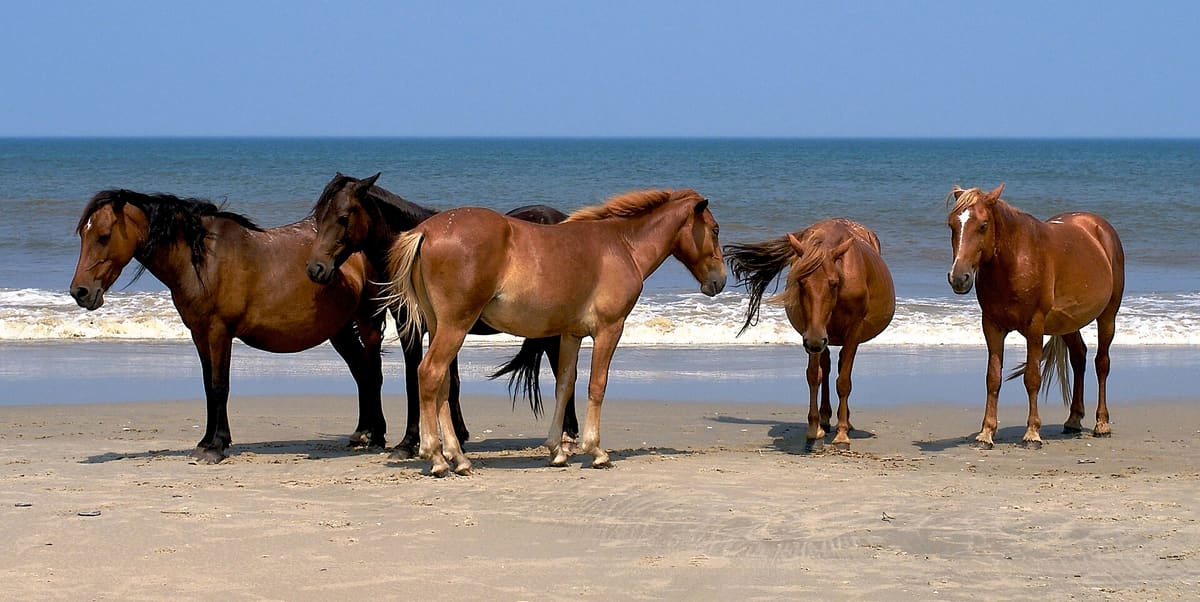
Most of the Outer Banks wildlife you hear about turns out to be a nature centre exhibit. This one is not. Loose on the beach and in the woods north of Corolla is a herd of Banker horses, descended from Colonial Spanish stock, and in June 2010 the North Carolina General Assembly made the Colonial Spanish Mustang the official horse of the state.
They are not fenced, not fed and not tame. They are also not a photo opportunity that the law leaves up to your judgement, which is the part most visitors do not find out until somebody in a county truck explains it to them.
A managed wild herd, which is a harder job than it sounds
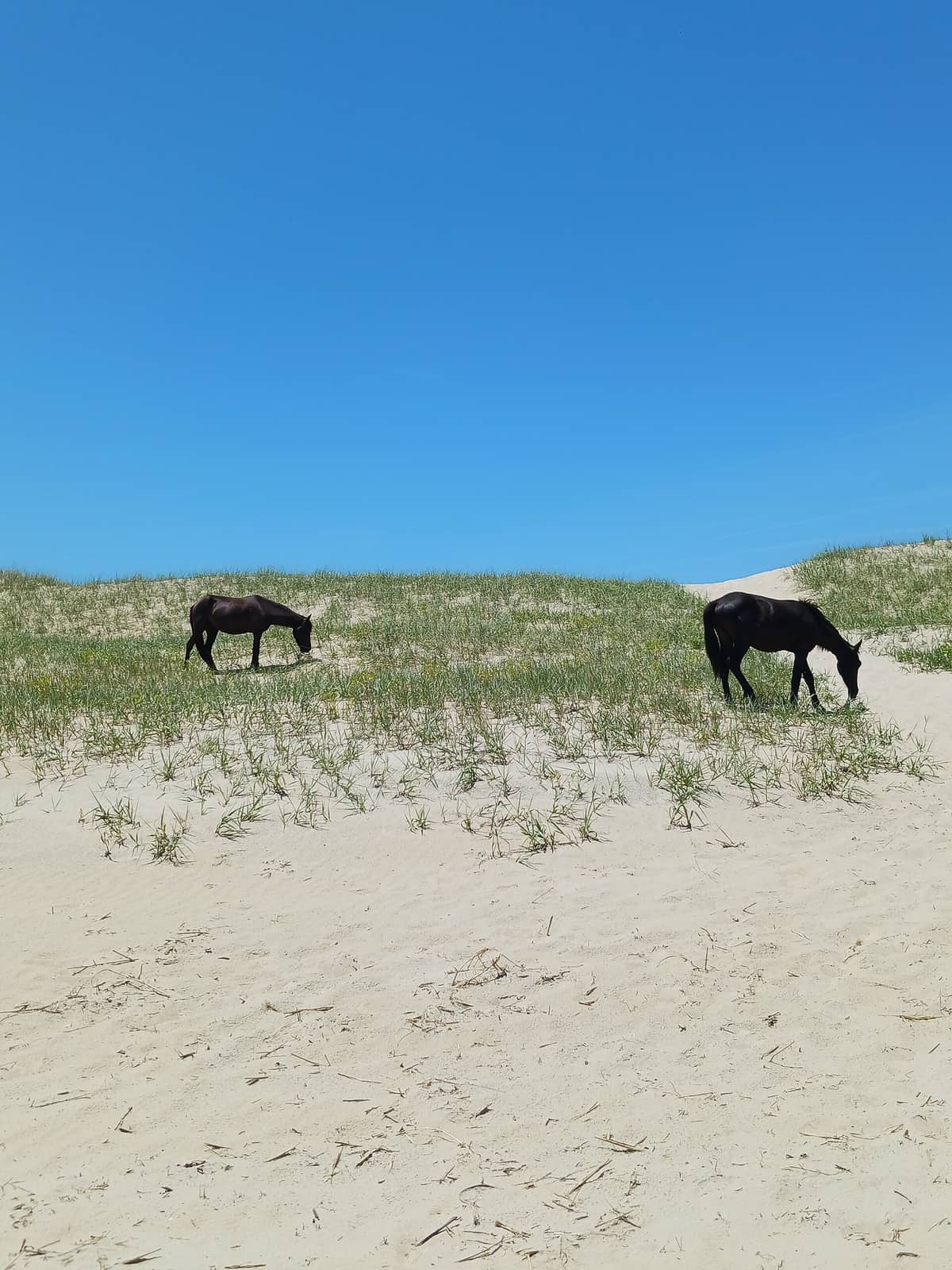
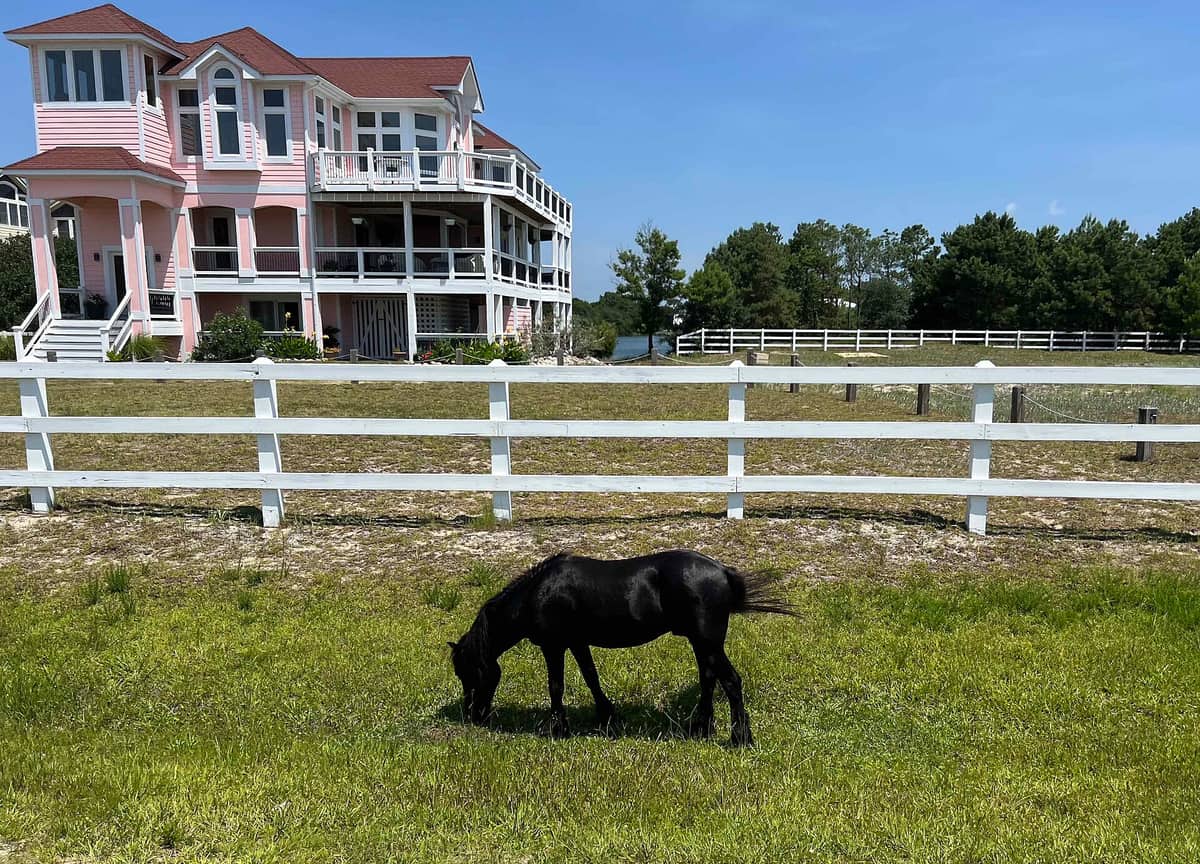
The Corolla Wild Horse Fund manages the herd across 7,544 acres of beach, dune and maritime forest. That acreage also holds roughly 700 houses, thousands of people and a steady stream of vehicles, which is the whole problem in one sentence. This is not a remote refuge. It is a neighbourhood that horses walk through.
Population is controlled with an immunocontraceptive called PZP, administered once a year by trained staff using a CO2 pistol, a rifle or a blowgun, with the training done at the Science and Conservation Center in Montana. It is the least invasive method available, and it is why the herd stays at a size the habitat can carry rather than crashing.
There is also a rule that surprises people who bring their own animals: it is unlawful to keep, ride, walk or bring a domestic horse into the area from the end of the paved portion of NC 12 up to the Virginia line. The point is to keep disease and interbreeding away from the wild herd.
Getting there, and the rules that carry a penalty
The pavement on NC 12 stops at the north end of Corolla. Past that the beach is the road.
You need four wheel drive. Currituck County's guidance is not hedged: if your vehicle is not equipped with four wheel drive, do not attempt to drive on the beach. Air your tyres down before the ramp, around 20 psi for an SUV or a half ton 4x4 and about 35 for a three quarter ton, and there are air stations at Historic Corolla Park. Do not stop on the ramp itself. Fill the tank first, because there are no petrol stations up there at all.
Once you are on the sand the speed limit is 35 mph, dropping to 15 mph within 300 feet of any person. Between mileposts 14.5 and 17, from 9 a.m. to 5 p.m. between the Friday before Memorial Day and Labor Day, vehicles have to use the lanes next to the dune line. After dark the whole beach, parking areas included, counts as driving lanes.
To park on the beach you need a county issued beach parking permit, required from the second Saturday of May through the last Saturday in September. If you are renting a house in the 4x4 area your rental company or the owner normally supplies two. If you are staying further south, you can buy a weekly permit from the county. Sort this out before you drive north.
And then the rule this whole article is named after. The Currituck County wild horse ordinance makes it punishable by law to feed a wild horse or to come within 50 feet of one. Cruelty, enticing, luring, harbouring, seizing a horse, and failing to report an injured one are all offences too. Fifty feet is about four car lengths. If a horse walks toward you, you are the one who has to move.
The reason for the feeding ban is worth stating plainly. These animals live on marsh grass and salt tolerant plants. Garden vegetables and bread cause colic that kills them, and a horse that learns people mean food starts approaching cars. That is how horses die here.
If you would rather not drive it, the Corolla Wild Horse Fund keeps a museum and gift shop at 1130E Corolla Village Road in Corolla, open Tuesday to Saturday from 10 a.m. to 4 p.m. in season, and the number is (252) 453-8002. Commercial tour operators run trips up the beach daily in season and take the driving off your hands.
Rules, permit seasons and prices change, so check Currituck County's beach driving page and the Corolla Wild Horse Fund before you go.
Common questions
Where are the Corolla wild horses?
North of Corolla village, in the off road area that starts where the paved portion of NC Highway 12 ends and runs to the Virginia state line. That is 7,544 acres of beach, dune and maritime forest, and it also contains about 700 houses, so the horses move between the shoreline, the yards and the woods.
How close can you get?
No closer than 50 feet. The Currituck County wild horse ordinance makes coming within 50 feet of a horse punishable by law, along with feeding, enticing, luring, harbouring or seizing one, and failing to report an injured horse. Fifty feet is roughly four car lengths.
Can you drive up there in a normal car?
No. The county is blunt about it: if your vehicle is not four wheel drive, do not attempt the beach. You also need to air your tyres down before the ramp, and there are no petrol stations in the 4x4 area.
Do you need a permit?
To park on the beach, yes, from the second Saturday of May through the last Saturday in September. Renters in the 4x4 area normally get two permits through the rental company or the owner. Visitors staying elsewhere can buy a weekly permit from the county. Check with Currituck County before you drive up.
Is a guided tour worth it?
If you are not confident driving on soft sand, yes. A tour operator knows where the herd was that morning and takes on the driving, the tyre pressure and the permit question. Seeing the horses is free from the public beach if you can get yourself there safely.
Why can't you feed them?
Because it kills them. These horses live on marsh grass and salt tolerant plants. Apples, carrots and bread cause colic they cannot survive, and food teaches them to approach vehicles and houses, which is how horses end up hit on the beach.
Staying nearby?
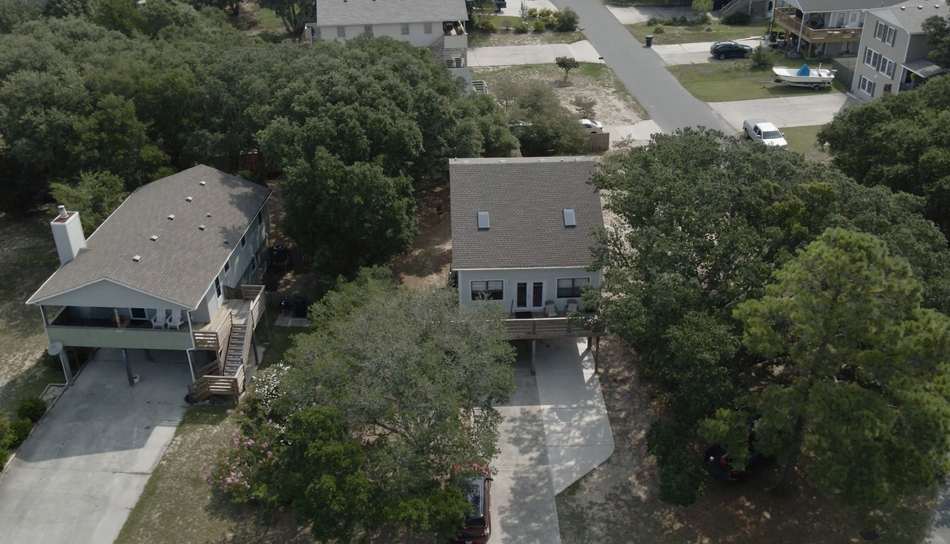
Corolla is about an hour north of our Kill Devil Hills places, so this is a day trip rather than an afternoon.
Browse the properties