In short
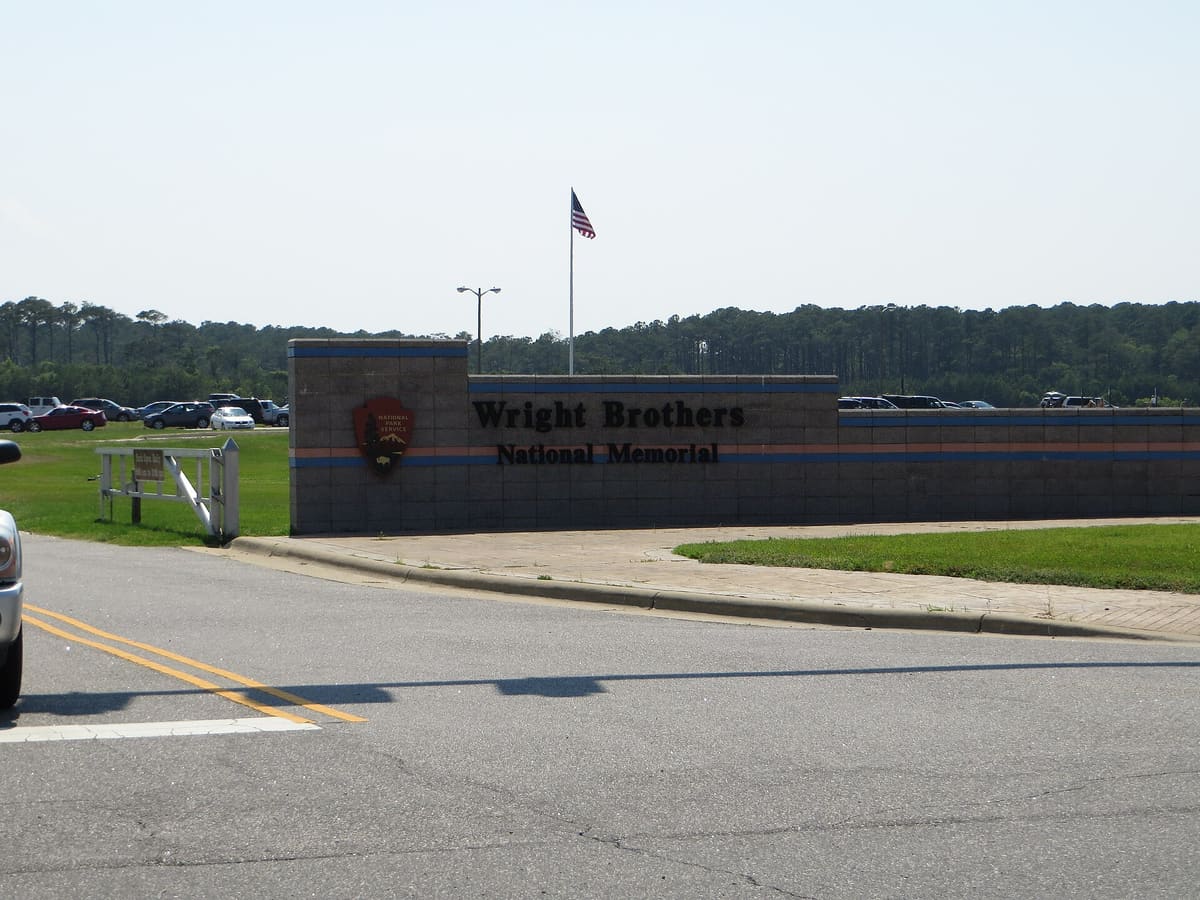
Wright Brothers National Memorial sits at mile post 7.5 in Kill Devil Hills and protects the field where the first powered flights happened on December 17, 1903. Entry is $10 per person aged 16 and over, card only, and the park is open 9 a.m. to 5 p.m. every day but Christmas. Allow about 90 minutes. The part most people remember is not the monument but the four stone markers on the grass.
- Where
- Kill Devil Hills, NC
- Cost
- $10 per person aged 16 and over. Under 16 free. Card only, no cash
- Season
- Open year round, 9 a.m. to 5 p.m. Closed Christmas Day
- Time needed
- 1.5 to 2 hours
- Good for
- Families, history readers, anyone who has ever flown anywhere
- Address
- 1000 N. Croatan Highway, Kill Devil Hills, NC 27948
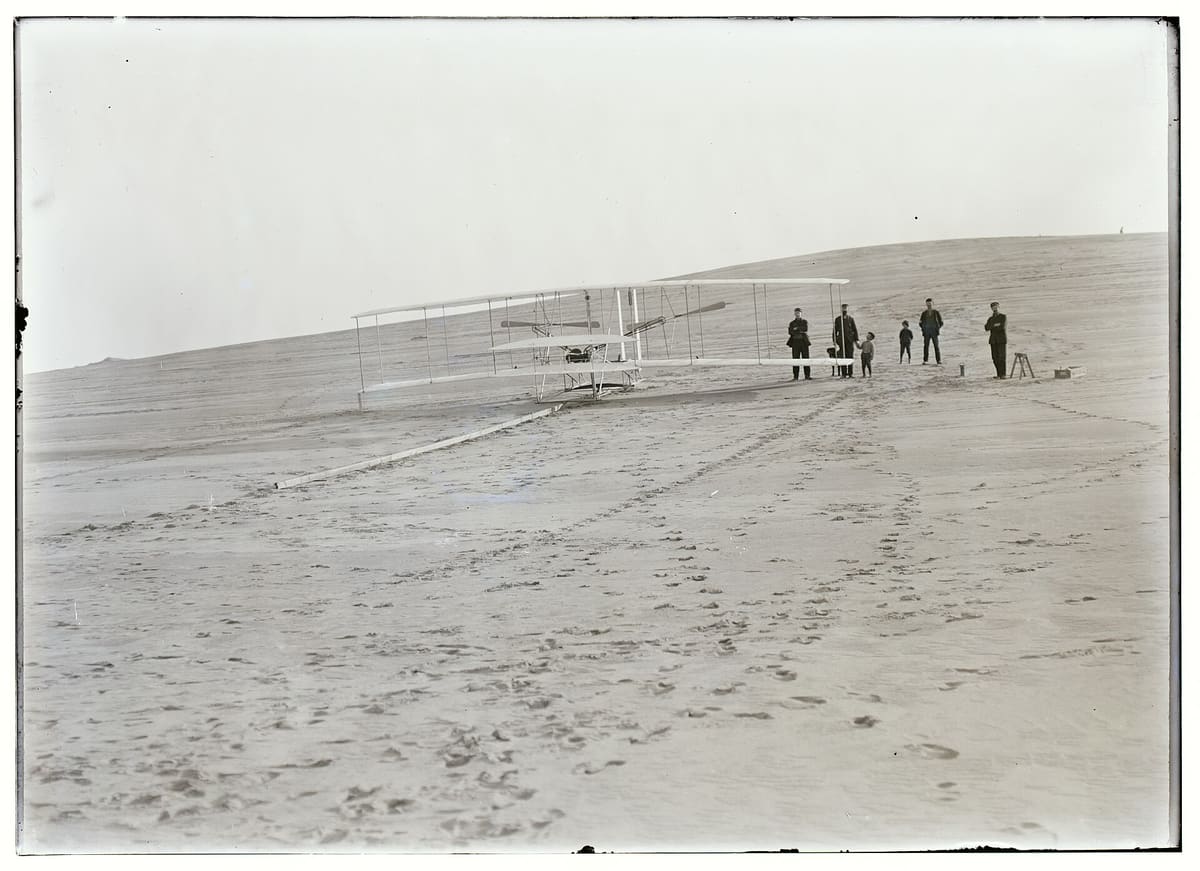
Most national parks ask you to imagine what happened. This one does not. The field is still a field, the distances are marked in stone where they actually fell, and the whole thing took twelve seconds.
That is the surprise of the place. You arrive expecting a museum and you get a piece of measured ground.
What actually happened here
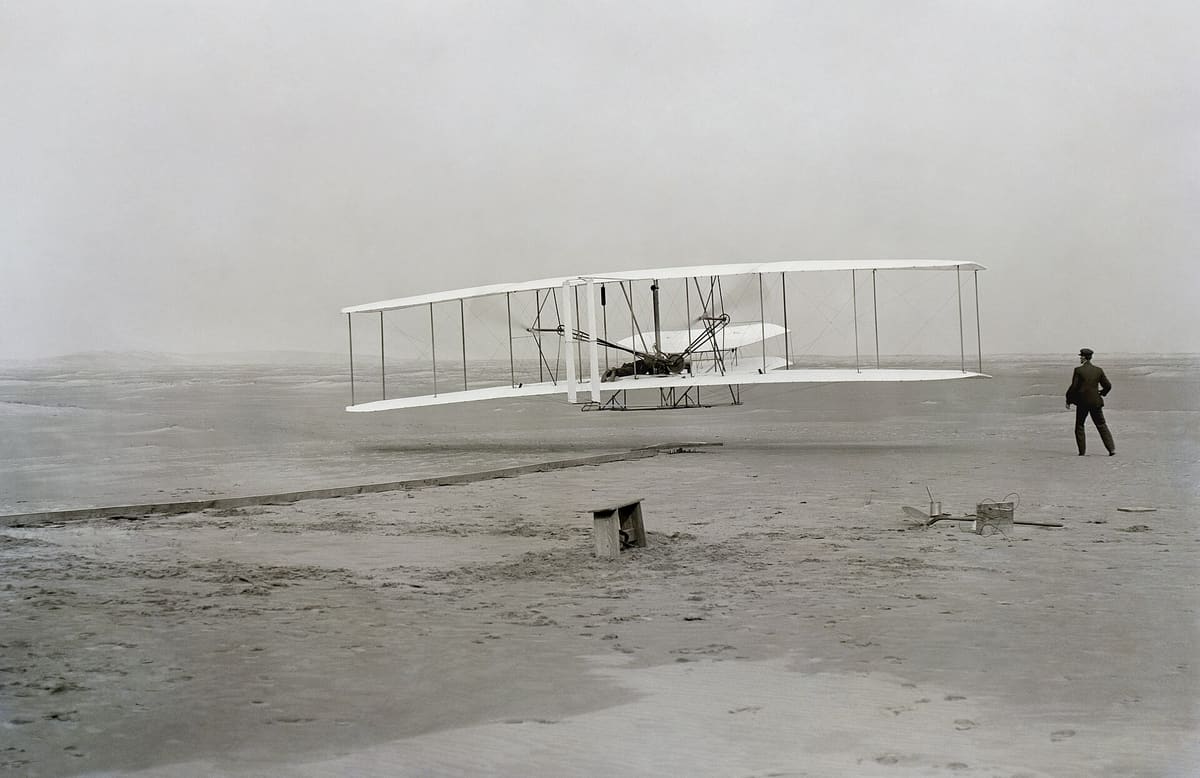
On the morning of December 17, 1903, Orville Wright lay flat on the lower wing of a machine the brothers had built themselves, released a wire, and travelled 120 feet in twelve seconds at a height of about eight feet. It was 10:35 a.m.
They flew three more times that day, alternating pilots. The distances went 120 feet, then 175, then 200, and then, with Wilbur flying, 852 feet in 59 seconds. Then a gust caught the Flyer on the ground and damaged it badly enough that it never flew again.
The photograph everyone knows was taken by John T. Daniels, one of the men from the nearby lifesaving station who had come to help move the machine. Five people watched the first powered flight in history. That was the entire audience.
The flight line is the real exhibit
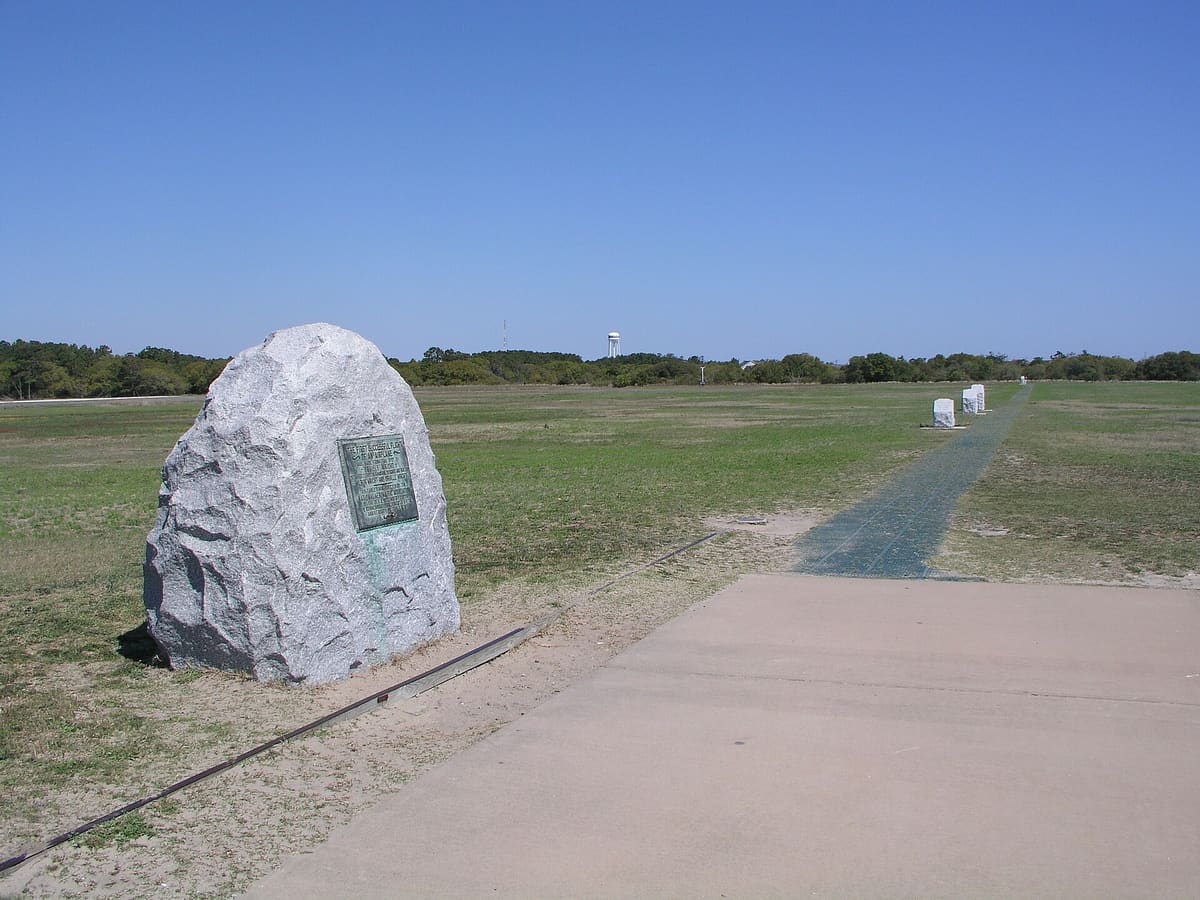
Walk out past the visitor center and you reach a granite boulder sitting on the grass. That is the takeoff point, placed in 1928 for the 25th anniversary, at a ceremony that drew more than 3,000 people including Orville Wright himself and Amelia Earhart. A replica of the 60 foot launching rail runs beside it, because the sand was too soft for wheels and the Flyer had to slide.
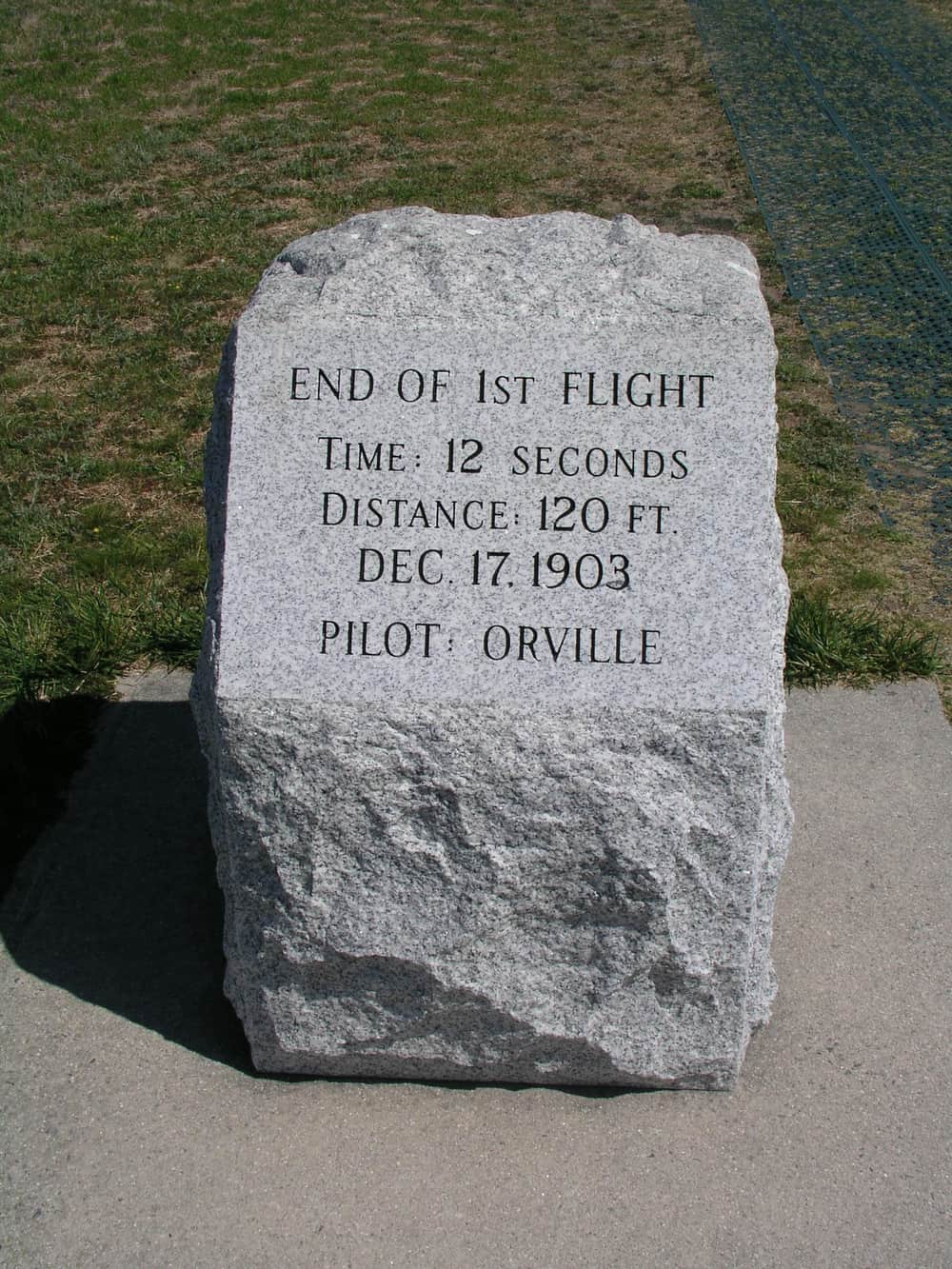
From the boulder, four numbered markers run away from you across the field. Each one stands where a flight ended.
The first marker is closer than you expect
This is the part that lands. You stand at the boulder, look at the first marker, and it is barely down the lawn. One hundred and twenty feet is shorter than a passenger jet. People walk it in about twenty seconds, which is longer than the flight took.
Then you keep walking to the fourth marker, 852 feet out, and the scale of what changed in one morning starts to make sense. Take the walk. Reading the numbers on a sign is not the same as covering the distance on foot.
The monument on the hill
Kill Devil Hill is the 90 foot dune the brothers used for their glider tests before they ever added an engine. It used to wander like the dunes at Jockey's Ridge. It was planted and stabilised so the monument could sit on it.
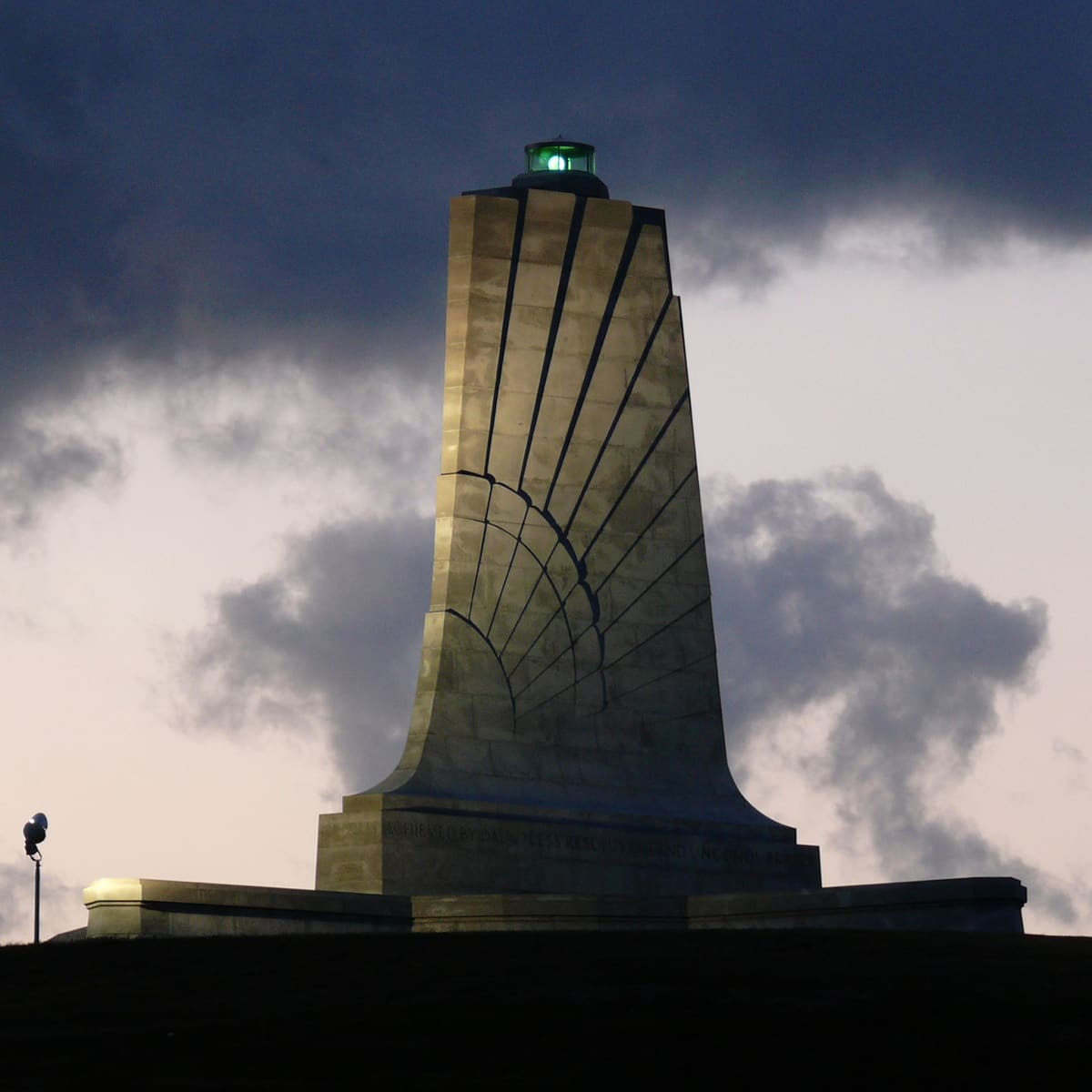
The monument is 60 feet of North Carolina granite, dedicated in November 1932, shaped a little like a wing and cut with the words "in commemoration of the conquest of the air." A paved path takes you up. It is a short climb and worth doing even if you skip everything else.
The view from the top
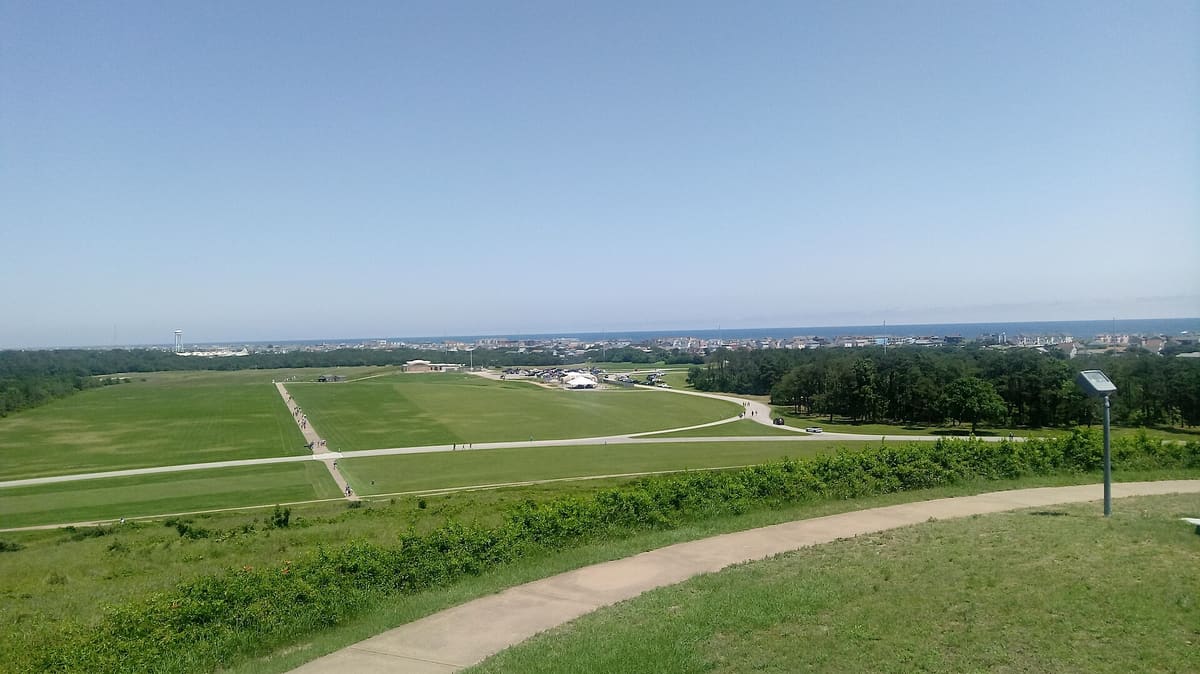
From the base of the monument you can see the whole flight field laid out below, the visitor center, the reconstructed camp, and the line of markers you just walked. On a clear day you can see water on both sides of the island.
It is also the best place to understand why they came here at all. Steady wind, soft ground to land on, and almost nobody around to watch them fail.
The camp buildings
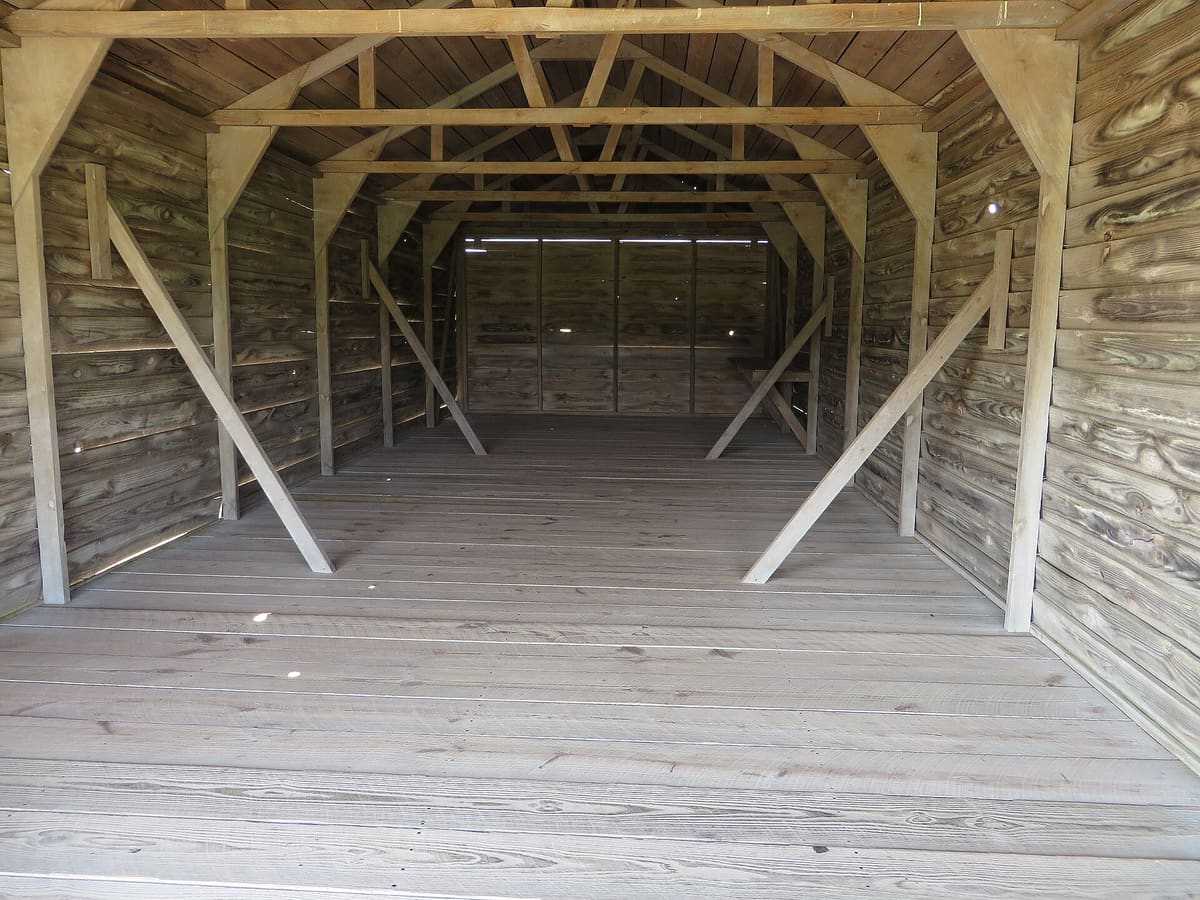
Two wooden sheds sit near the flight line, rebuilt from the brothers' photographs. One is the hangar the Flyer lived in. The other is where they slept, cooked and waited out the weather.
Look inside and the ambition of the thing gets clearer. These are plain wooden sheds in the middle of nowhere. The brothers ran a bicycle shop in Ohio and funded the work themselves, coming down for a few weeks a year, and this was the whole operation.
The visitor center
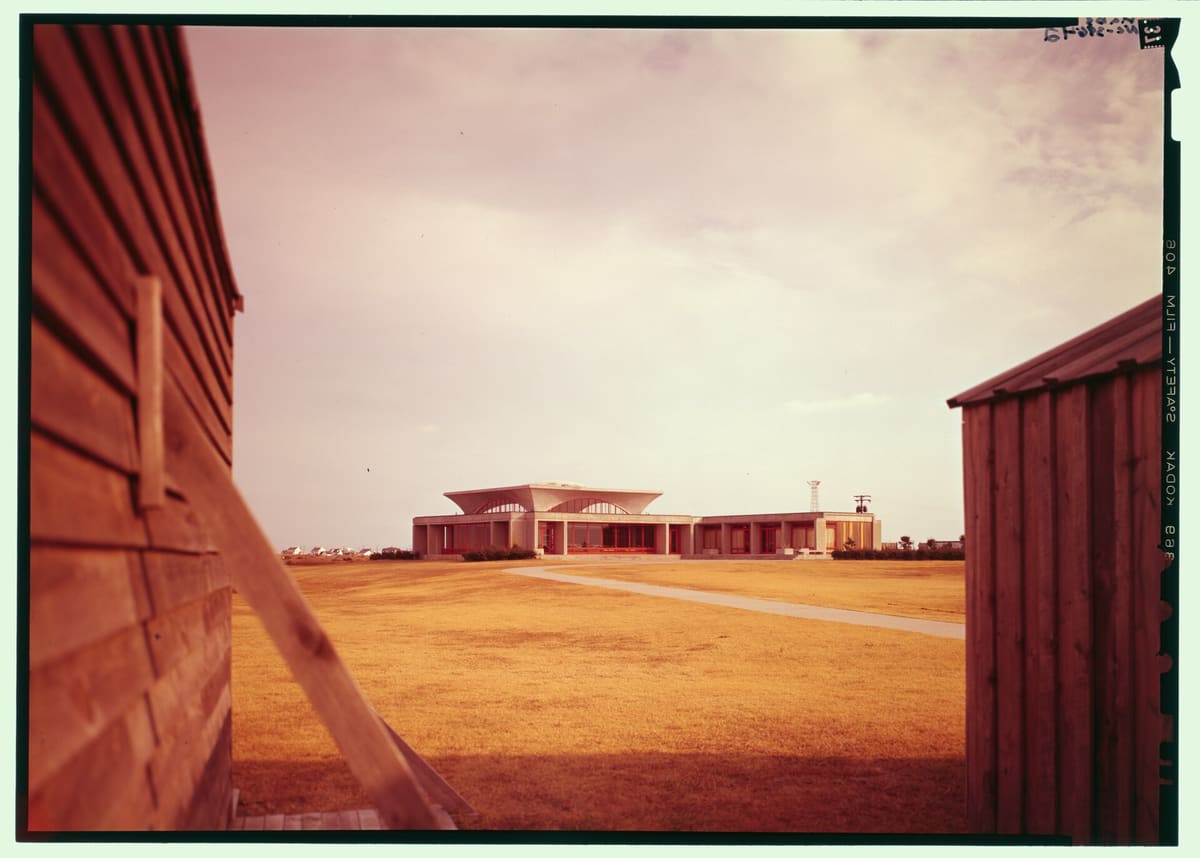
The visitor center holds a full size reproduction of the 1903 Flyer, which is larger than photographs suggest, plus exhibits on how the brothers solved control when everyone else was chasing power. Rangers give talks through the day and they are genuinely good. Ask when the next one starts.
The building itself is a listed landmark, a 1960 modernist design that became a National Historic Landmark in 2001. There is a bookstore and this is where the restrooms are.
Practical notes
Entry is $10 per person aged 16 and over and it is good for repeat entry on the days it covers. Under 16s are free. The park takes cards only and does not accept cash, which catches people out at the gate. You can also buy ahead on Recreation.gov.
Go early or late. Mid-morning through mid-afternoon in July is the busiest, and the flight line has no shade at all. Bring water and a hat.
There is a working airstrip on site, First Flight Airport, with a 3,000 foot runway open in daylight only and no fuel or services. Small aircraft still land here, which is a good detail to watch for.
Hours and fees can change, so it is worth checking the official National Park Service page before you drive over. The park office is on (252) 473-2111.
Common questions
How much does it cost to visit Wright Brothers National Memorial?
$10 per person aged 16 and over. Children under 16 are free. A $35 annual pass for this park admits the holder plus up to three other adults. The park does not accept cash, so bring a card or buy ahead on Recreation.gov.
What are the hours?
9 a.m. to 5 p.m., seven days a week, all year. There is no seasonal change to the hours. The park closes only on Christmas Day.
How long do you need there?
About 90 minutes covers the visitor center, the flight line and the walk up to the monument. Two hours if you stop for a ranger talk or spend real time in the museum.
Can you walk up to the monument?
Yes. A paved path climbs Kill Devil Hill to the base of the 60 foot granite monument, and you can walk all the way around it. The hill is about 90 feet high, so it is a short climb rather than a hike.
Is there a day when it is free?
Several. The national fee free days apply, and this park also waives the fee on August 19 for National Aviation Day and on December 17, the anniversary of the first flight.
Staying nearby?
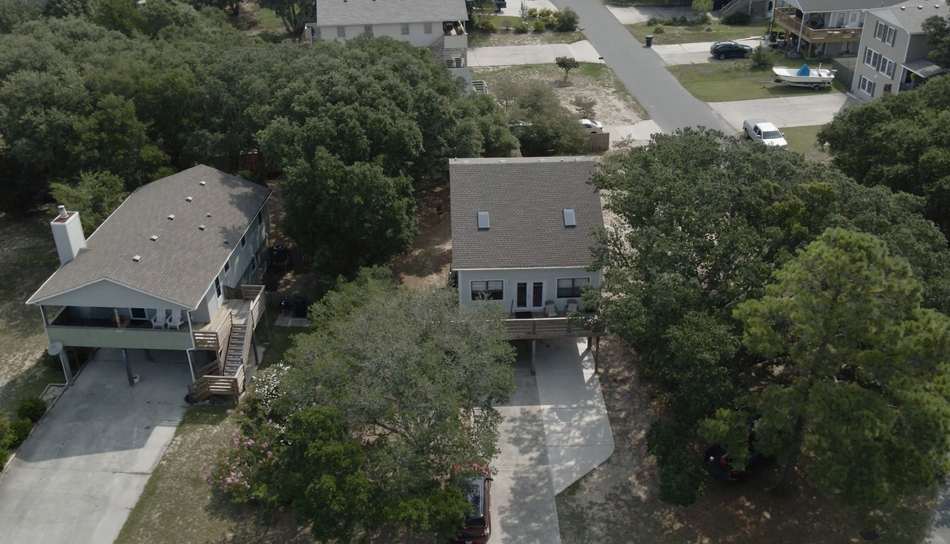
The memorial is about five minutes from our places in Kill Devil Hills and ten from Kitty Hawk.
Browse the properties